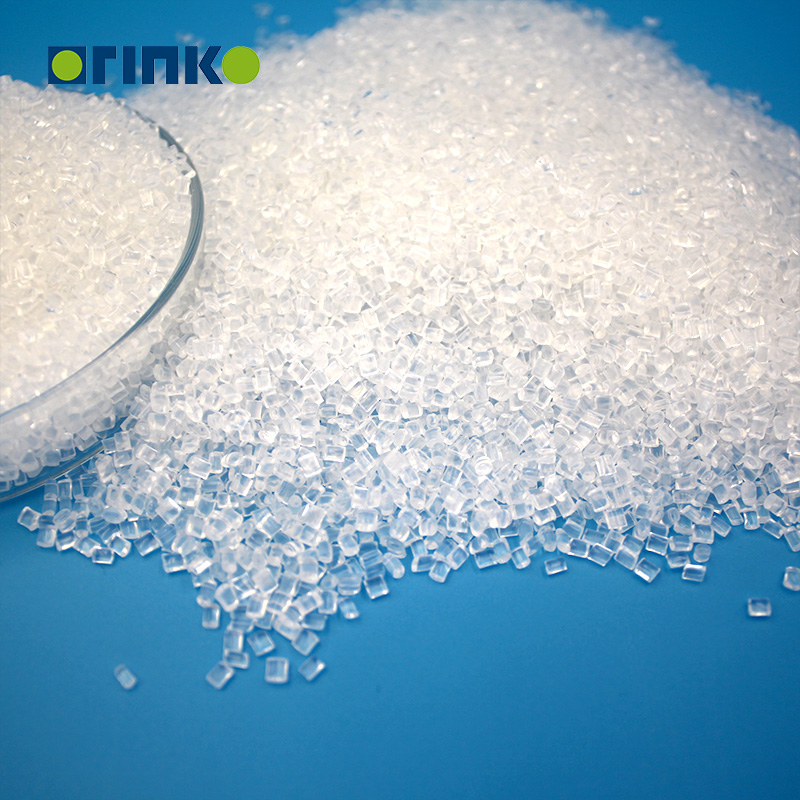
The shift toward 800V EV architectures and high-density electronics has pushed standard engineering plastics past their thermal and electrical limits. Modern systems demand materials capable of surviving extreme operating conditions. Using conventional polyamides like PA66 in high-voltage or surface-mount technology (SMT) applications leads to catastrophic outcomes. You often see dielectric failure, moisture-induced dimensional shifts, or severe blistering during reflow soldering. Specifying the correct high-temperature nylon resin requires balancing thermal endurance, moisture resistance, and processability. This guide breaks down the core chemistries, critical evaluation metrics, and implementation risks for engineers and procurement teams. We will explore how to align material properties with your specific electrical constraints. You will learn how to mitigate processing risks and ensure reliable field performance.
Key Takeaways
High-temperature nylon resins bridge the gap between standard polyamides and ultra-high-cost specialty polymers (like LCP or PEEK) in automotive and electronic applications.
Material selection hinges on specific chemistries: PA6T offers peak thermal resistance, PA6I/6T provides dimensional stability, and MXD6 excels in structural rigidity with low moisture uptake.
Evaluating a nylon resin for electrical connectors requires mapping its Comparative Tracking Index (CTI) and Heat Deflection Temperature (HDT) against your specific SMT profiles and EV operating environments.
Manufacturing success depends on mitigating processing risks, specifically moisture absorption prior to molding and warpage in thin-wall connector designs.
The Engineering Challenge: Framing the Need for High-Heat Polymers
Modern electrical components operate in increasingly hostile environments. EV power electronics, onboard chargers, and high-density printed circuit boards (PCBs) face immense stress. They require materials capable of withstanding continuous high operating temperatures. These environments often exceed 150°C during normal operation. Furthermore, components endure transient thermal spikes during SMT reflow processes. Temperatures can easily peak at 260°C. Standard polymers melt, warp, or degrade under these conditions.
Miniaturization complicates this challenge significantly. Engineers continually reduce connector pitches to save space. We now see pin spacings of 0.5mm or smaller. As a result, the physical walls of the connector become incredibly thin. Materials must maintain high flowability during injection molding. They must fill microscopic mold cavities. However, they cannot lose mechanical strength in the process. Thin walls carry high structural burdens in modern assemblies.
Standard engineering plastics consistently fail these demands. When you evaluate standard PA6 or PA66, you uncover several critical failure modes:
Moisture Absorption: Standard polyamides absorb significant ambient moisture. The water acts as a plasticizer. It causes dimensional swelling and structural weakness.
Dielectric Failure: Heat and moisture lower the dielectric strength of standard plastics. This creates a severe safety risk in high-voltage EV applications.
Chemical Vulnerability: Modern vehicles use aggressive coolants and lubricants. Standard PA66 offers poor chemical resistance against these specific EV fluids.
Reflow Blistering: Absorbed moisture turns into steam during SMT soldering. The sudden expansion causes the plastic part to blister or explode.
Not all High-Temperature Polyamides (HTPAs or PPAs) behave the same way. Manufacturers synthesize these materials using different monomers. The exact chemical formulation determines the final performance profile. You must match the specific chemistry to your engineering requirements.
PA6T Polyamide Resin (High Thermal Baseline)
The formulation of PA6T polyamide resin relies on terephthalic acid. It features a rigid aromatic ring structure. This chemistry delivers excellent thermal stability. It boasts a very high melting point, typically around 320°C. It demonstrates strong resistance to soldering heat. We find it best for standard SMT connectors and automotive under-the-hood components. However, there are trade-offs. Pure PA6T can be brittle. It often requires modification or copolymerization to achieve an optimal processing window.
PA6I/6T Nylon Resin (Dimensional Stability)
Engineers developed PA6I/6T nylon resin to solve processing challenges. It is an amorphous and semi-crystalline copolymer blend. Adding the 6I component reduces the crystallization speed. This delay results in lower shrinkage rates during cooling. You achieve a superior surface finish and precise dimensional accuracy. It works best for complex connector housings requiring tight tolerances. Applications highly sensitive to warpage benefit immensely from this blend. The main trade-off is a slightly lower peak heat resistance compared to pure PA6T.
MXD6 Nylon Resin (High Modulus & Low Moisture)
Chemists synthesize MXD6 nylon resin using meta-xylenediamine. This unique structure yields exceptionally high mechanical strength. It exhibits very low moisture absorption. It also provides excellent gas barrier properties. We recommend it for structural electronic components and metal-replacement housings. It excels in precision internal connectors. The primary trade-off involves a different processing window. You must utilize specific tooling temperature controls to mold it effectively.
Table: Core Chemistry Comparison
Chemistry Type
Primary Strength
Best Application Scenarios
Key Trade-off
PA6T
Peak Thermal Resistance
SMT Connectors, Under-hood Parts
Can be brittle; requires modification
PA6I/6T
Dimensional Stability
Complex Housings, Thin-wall parts
Slightly lower peak heat limit
MXD6
High Modulus, Low Moisture
Structural Parts, Metal Replacement
Narrow processing window
Key Performance Criteria for Electrical Connectors
You need a reliable framework for mapping material features to engineering outcomes. Selecting a nylon resin for electrical connectors requires deep analysis of several metrics. You must ensure the polymer meets specific industry standards.
Electrical Insulation (CTI & Dielectric Strength)
High-voltage EV systems demand flawless electrical insulation. The resin must achieve high Comparative Tracking Index (CTI) ratings. You typically need a Performance Level Category (PLC) of 0, meaning it withstands 600V or more without tracking. This prevents dangerous electrical arcing between tightly spaced connector pins. High dielectric strength ensures the material acts as a robust barrier under high electrical loads.
Thermal Endurance (HDT & RTI)
Thermal stability is non-negotiable. The material must maintain mechanical integrity at high Heat Deflection Temperatures (HDT). A high HDT ensures the connector pins do not shift when the component heats up. Furthermore, you must evaluate the Relative Thermal Index (RTI). The RTI indicates how well the polymer performs over thousands of hours of long-term heat aging.
Dimensional Stability & Moisture Uptake
Water absorption represents the greatest threat to polyamide stability. Moisture lowers the glass transition temperature (Tg) of the polymer. This alters the connector dimensions and weakens its structure. Always assess the resin using conditioned data rather than just dry-as-molded (DAM) data. Conditioned data reflects how the material will actually perform in a humid field environment.
Color Stability & Flame Retardancy
These properties are crucial for EV applications. High-voltage connectors require visual identification. They must utilize specific "EV Orange" colorants. However, standard orange pigments degrade at the high processing temperatures needed for these polymers. They lose their color or, worse, compromise dielectric properties. You must specify halogen-free, high-heat colorants. The material must also achieve UL94 V-0 compliance to ensure strict flame retardancy.
Chart: Performance Mapping Matrix
Engineering Requirement
Critical Metric to Evaluate
Target Threshold (Typical)
Prevent Electrical Arcing
Comparative Tracking Index (CTI)
PLC 0 (>600V)
Survive SMT Reflow
Heat Deflection Temperature (HDT)
>280°C
Long-Term Heat Aging
Relative Thermal Index (RTI)
>150°C Continuous
Fire Safety Compliance
UL94 Flammability Rating
V-0 at 0.4mm to 0.8mm
Implementation Risks & Processing Realities
Achieving optimal material properties on paper means nothing if you cannot mold the part. You must understand the realities of processing high-temperature polyamides. These materials demand rigorous manufacturing controls.
Moisture Management Pre-Molding
High-temperature nylons are highly hygroscopic. They eagerly absorb moisture from the air. You must dry the resin strictly according to manufacturer specifications. Typically, moisture content must drop below 0.1% before entering the injection barrel. Failure to dry the material results in disaster. You will experience splay marks on the surface. The parts will suffer from severe brittleness. The mechanical and electrical properties will degrade instantly. Always use well-calibrated desiccant dryers.
Tooling & Equipment Requirements
Processing temperatures for these polymers often exceed 300°C. Standard injection molding setups usually fall short. You require specialized tooling equipment. The molds themselves need high temperatures to ensure the polymer crystallizes properly. Oil-heated molds are standard. Tool temperatures must reach between 130°C and 150°C. Standard water-cooled molds simply cannot reach these temperatures. If you use cold molds, you will produce amorphous parts. These parts will exhibit compromised thermal and mechanical properties.
Warpage in Thin-Wall Designs
Pure resin lacks the rigidity needed for connectors. Therefore, glass-filled variants are standard. You will typically see 30% to 50% glass fiber (GF) content. However, glass fibers orient themselves along the flow path during injection. This orientation causes severe anisotropic shrinkage. The part shrinks differently across its length than across its width. In thin-wall connector designs, this leads to significant warpage.
To mitigate warpage risks, implement these best practices:
Gate Design: Utilize fan gates instead of pinpoint gates to encourage uniform fiber distribution.
Flow Analysis: Conduct comprehensive mold-flow simulations prior to tooling.
Cooling Layout: Design conformal cooling channels to ensure uniform heat extraction across complex geometries.
Packing Pressure: Optimize hold times and packing pressure to compensate for localized shrinkage.
Shortlisting Logic & Next Steps for Procurement
Finalizing material choices requires a structured evaluation process. You cannot guess which polymer will work. Procurement and engineering teams must collaborate closely to ensure the selected resin meets every technical demand.
Define Baseline Constraints
Start by establishing the non-negotiables for your specific project. Identify the maximum SMT reflow temperature the component will face. Define the precise CTI rating required by your high-voltage system. Confirm the exact UL flammability requirements. Once you lock in these baseline constraints, you immediately eliminate dozens of unsuitable materials from your search.
Prototyping Protocol
Never bypass thorough testing. Always request the Technical Data Sheets (TDS) and Material Safety Data Sheets (MSDS) from suppliers. Pay close attention to the difference between DAM and conditioned properties. Utilize a High-Temperature Nylon Resin only after running precise mold-flow simulations. Simulate the injection process before you cut steel for the actual tools. Request material samples for prototyping. Mold small batches and subject them to thermal shock and moisture conditioning tests. This protocol protects you from massive downstream failures.
Conclusion
High-temperature nylon resins like PA6T, PA6I/6T, and MXD6 are non-negotiable for modern EV and miniaturized electronics. They offer an essential balance of thermal resistance, robust dielectric strength, and mechanical toughness. Standard plastics simply cannot survive 800V architectures or intensive SMT reflow processes. To succeed, you must match the specific monomer chemistry to your performance needs. You must also rigorously control the injection molding environment, paying strict attention to moisture management and tool temperatures. We advise engineers to request physical material samples immediately. Review specific grade technical data sheets carefully, paying special attention to glass fill percentages and flame retardant types. Engage a polymer application engineer early in your design phase to ensure your custom formulation perfectly matches your engineering intent.
FAQ
Q: What is the difference between standard PA66 and High-Temperature Nylon (PPA)?
A: The primary difference lies in the molecular structure. PPA features an aromatic ring within its polymer chain. This rigid structure provides a significantly higher glass transition temperature (Tg). It dramatically lowers moisture absorption compared to standard PA66. Consequently, PPA easily survives aggressive SMT reflow processes, whereas PA66 would blister, melt, or lose structural integrity.
Q: Why is orange color stability difficult in EV high-voltage connectors?
A: PPA requires extreme processing temperatures, often exceeding 300°C. Standard orange pigments degrade entirely at these elevated heat levels. When pigments burn out, they compromise both the visual warning color and the fundamental dielectric properties of the plastic. Manufacturers must use highly specialized, halogen-free, high-heat colorants to maintain safety standards.
Q: Can high-temperature nylon replace LCP in connectors?
A: Yes, depending on the wall thickness. Nylon offers superior weld-line strength. It proves highly effective for durable structural parts and larger housings. However, Liquid Crystal Polymer (LCP) possesses superior inherent flow characteristics. This makes LCP the preferred option for ultra-micro connectors with extremely narrow pitch requirements.
Q: How does glass fiber content affect PA6T/PA6I/6T performance?
A: Adding 30% to 50% glass fiber is industry standard. It massively boosts the Heat Deflection Temperature (HDT) and structural rigidity of the connector. However, it also increases the risk of warpage. As glass fibers align during injection molding, they create uneven shrinkage. You must use careful gate design and flow analysis to prevent twisted parts.
Orinko Advanced Plastics Co.,ltd. is an innovator and is dedicated to developing high performance Polymer Materials.Including Nylon/Polyamide, Engineering Plastics etc.