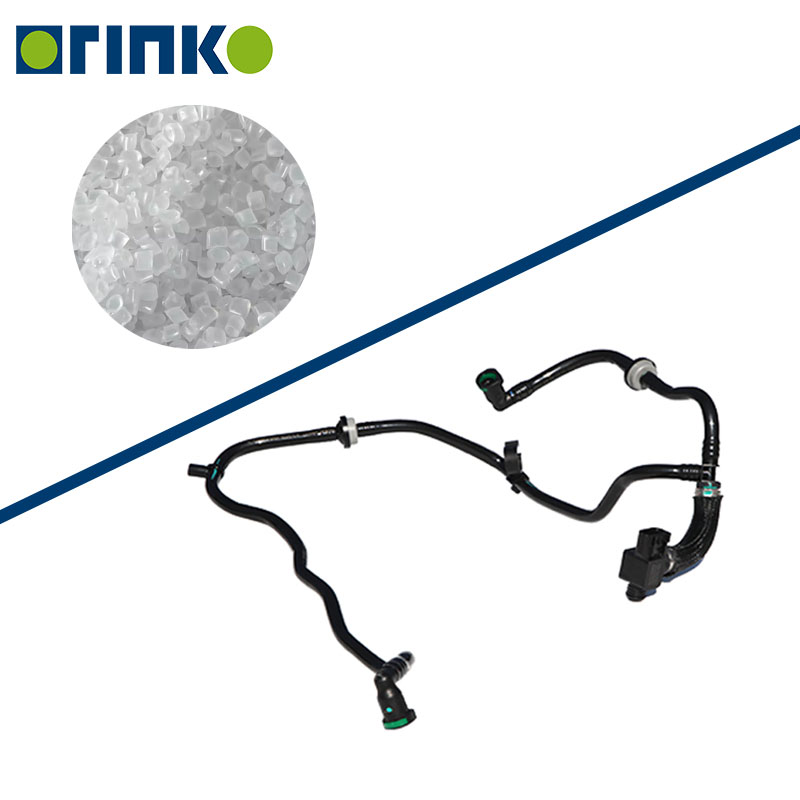
Automotive engineering teams face unique design constraints today. Transitioning from internal combustion engines to modern electric vehicle architectures fundamentally shifts thermal management requirements. Engineers must prioritize structural lightweighting alongside extreme chemical resistance. They also need reliable materials capable of forming complex routing geometries inside cramped engine compartments. Traditional metals and standard elastomers often add excess weight to these systems. These legacy materials also risk premature degradation when continuously exposed to modern water-glycol coolants under thermal stress. This article provides a highly practical decision framework for automotive engineers and procurement teams. You will learn how to accurately evaluate core polymer characteristics. We will guide you through selecting the exact Nylon Resin grades necessary to secure system longevity. You will discover how to meet strict burst-pressure compliance across specific thermal management applications.
Key Takeaways
Selecting the optimal nylon resin requires balancing hydrolysis resistance, dimensional stability, and long-term heat aging (LTHA).
Long-chain polyamides like PA610 and PA1010 offer essential low-moisture absorption properties necessary for stable EV cooling loops.
The choice between extrusion grades for tubing and injection-molding grades for connectors dictates assembly efficiency and burst pressure ratings.
Validating material compatibility with specific water-glycol ratios is a mandatory compliance step before prototyping.
The Engineering Requirements of EV Thermal Management
The Shift to Polyamides
Standard metals and traditional rubber compounds no longer satisfy the aggressive efficiency goals of modern electric vehicles. Automotive manufacturers are actively replacing aluminum and EPDM rubber with engineered thermoplastics. EV battery packs are exceptionally heavy. Every single gram removed from the cooling system directly improves overall vehicle range. Aluminum tubing requires complex, energy-intensive bending operations. It struggles to route tightly around intricate battery module architectures. EPDM rubber hoses require multiple joints, metallic clamps, and complex assembly steps. Clamps inherently introduce long-term failure points. Polyamides eliminate these pain points completely. They enable continuous, single-piece extrusion. This thermoplastic approach reduces vehicle mass significantly while streamlining the assembly line.
Operating Environment
We must define strict baseline success criteria for thermal management materials. Modern cooling loops endure incredibly harsh temperature cycles. Winter driving conditions frequently drop system temperatures to -40°C. Conversely, fast-charging cycles push fluid temperatures up to 80°C consistently. Localized hotspots near power electronics can spike to 120°C. The selected polymer must endure these violent temperature swings without becoming brittle or overly soft. The material also faces continuous fluid exposure from the inside. Simultaneously, it must withstand persistent road vibration and mechanical shock from the outside.
Chemical Compatibility Constraints
The chemical environment beneath an EV chassis is highly aggressive. Polymers face attacks from multiple directions. Internal cooling lines carry complex water-glycol mixtures. These coolants aggressively degrade weak molecular bonds at elevated temperatures. Furthermore, materials must resist accidental exposure to highly corrosive battery electrolytes. External components face winter road salts, including zinc chloride and calcium chloride. These salts cause severe environmental stress cracking in lower-grade plastics. Securing comprehensive chemical resistance is a mandatory prerequisite for any polymer entering the thermal loop.
Key Evaluation Criteria for Nylon Resin Selection
Hydrolysis Resistance & Moisture Uptake
Hydrolysis resistance stands as the most critical evaluation metric for cooling system polymers. Water molecules naturally penetrate standard polymer structures. They physically separate the internal polymer chains. This process acts as a plasticizer inside the material. It causes the component to swell, lose structural stiffness, and suffer severe dimensional changes. Engineers must specify a low water absorption nylon resin to prevent this mechanical degradation. Controlling moisture uptake ensures the tubing maintains its exact shape and strength over a demanding 10-to-15-year vehicle lifecycle.
Mechanical Performance Under Thermal Stress
Retaining mechanical strength over time determines system safety. Initial tensile strength matters, but burst pressure retention dictates real-world viability. Engineers must simulate extensive heat aging conditions. Testing protocols routinely demand over 3,000 hours of continuous high-temperature fluid exposure. The tubing must not rupture under sudden pressure spikes after this aging process. We evaluate materials based on their ability to maintain molecular integrity after prolonged thermal and chemical attacks.
Processability & Dimensional Stability
A material is only useful if manufacturers can process it efficiently. Corrugated tubes require highly consistent extrusion capabilities. Manufacturers must control wall thickness perfectly during high-speed production. Weak spots in thin walls create fatal burst risks. Conversely, quick-connectors and fluid valves demand exceptional injection molding precision. These parts feature intricate latching geometries and complex sealing grooves. The chosen polymer must flow easily into the mold and resist shrinkage upon cooling.
Permeation Rates
EV thermal loops operate as tightly closed systems. Coolant loss through porous tube walls forces owners to top up fluids manually. Zero-maintenance thermal loops demand materials offering ultra-low permeation rates. Engineers must establish strict criteria for preventing both fluid escape and external gas ingress. Minimizing permeation ensures the system maintains optimal thermal conductivity throughout the vehicle's lifespan.
Evaluation Criterion
Primary Testing Focus
Engineering Target
Consequence of Failure
Hydrolysis Resistance
Moisture Uptake %
Maintain dimensional limits over 15 years
Swelling, leaking joints, loss of rigidity
Mechanical LTHA
Burst Pressure Retention
> 50% retention after 3,000 hours
Catastrophic coolant line rupture
Processability
Extrusion/Molding Shrinkage
Predictable wall thickness and tight tolerances
Manufacturing defects, high scrap rates
Permeation Rates
Fluid Loss per m²
Near-zero coolant escape
Reduced cooling efficiency, maintenance needs
Comparing Long-Chain Polyamides: PA610 vs. PA1010
The Role of Long-Chain Structures
Understanding polymer chemistry helps engineers make better material decisions. Standard polyamides, like PA6 and PA66, feature relatively short carbon chains. They possess a high density of amide groups along their molecular backbone. Amide groups are highly hydrophilic. They readily attract and absorb water from both the environment and internal coolants. Long-chain polyamides fundamentally solve this structural flaw. They contain longer hydrocarbon segments between each amide group. This extended spacing drastically dilutes the water-attracting properties. It lowers overall moisture absorption and protects the material's mechanical integrity in wet environments.
PA610 Nylon Resin
Specifying a PA610 nylon resin brings distinct engineering strengths. It delivers very high mechanical strength and exceptional chemical resistance. Engineers frequently select it over standard PA66 because it offers vastly superior dimensional stability. It resists zinc chloride cracking highly effectively. Trade-offs do exist. PA610 exhibits moderately higher moisture absorption than PA1010. It also presents a stiffer overall profile. We find it optimal for rigid structural connectors, sensor housings, and manifold components where high rigidity is non-negotiable.
PA1010 Nylon Resin
For dynamic routing scenarios, PA1010 nylon resin shines. It originates largely from renewable castor oil derivatives, offering 100% bio-based potential. It provides superior flexibility alongside exceptional hydrolysis resistance. It consistently records the lowest moisture uptake among common long-chain polyamides. These specific traits make it an incredibly reliable nylon resin for cooling lines that require complex routing through tight battery pack spaces. However, engineers must navigate its higher baseline material costs. They must also account for its lower inherent stiffness when designing unsupported tubing spans.
Implementation Risks and Manufacturing Considerations
Weld-Line Weaknesses
Injection-molded fluid connectors often fail at their weld lines. Inside the mold cavity, two molten plastic flow fronts meet and fuse. This fusion zone naturally creates a microscopic structural weakness. Engineers must execute detailed mold flow analysis prior to tooling. Optimizing injection speeds, increasing mold temperatures, and selecting highly flowable resin grades mitigate this risk. Poor weld-line management guarantees premature bursting under sudden coolant pressure spikes.
Extrusion Line Speed vs. Quality
Manufacturing continuous corrugated tubing requires balancing speed against structural safety. High extrusion throughput improves production economics. However, pushing line speeds too fast risks dangerous wall-thickness variations. The corrugation process stretches the polymer rapidly. If the material cools inconsistently, it creates dangerously thin valleys within the tube corrugations. These micro-thin sections inevitably rupture under heat and pressure. Continuous inline laser measuring tools remain essential for maintaining quality assurance.
Supply Chain & Sourcing
Material availability dictates production timelines. Both PA1010 and PA610 rely heavily on bio-based monomers, specifically castor oil derivatives. Global agricultural yields impact the availability of these precursor chemicals. Sourcing teams must assess the global availability and typical lead times of these resins. Diversifying material approvals across multiple compliant long-chain polyamides prevents severe production bottlenecks during supply chain disruptions.
Adhesion and Assembly
Joining nylon components to dissimilar materials poses significant assembly challenges. EV systems often require integrating plastic cooling lines with metallic heat sinks or composite battery trays. We must carefully evaluate the resin's compatibility with modern joining techniques.
Ultrasonic Welding: Extremely fast, but requires rigid materials to transmit vibrations effectively. Flexible PA1010 may dampen the necessary acoustic energy.
Laser Welding: Highly precise. It requires one component to be highly laser-transparent while the other acts as an absorber.
Adhesive Bonding: Standard nylons resist chemical adhesion naturally. They demand specialized surface treatments like plasma etching to ensure structural adhesive bonds hold tight.
Shortlisting Logic: Matching Resin to Sub-System
Battery Cooling Loops
Battery pack cooling demands precision. The lines weave intricately between high-density cell modules. They must navigate sharp corners without kinking. Fluid permeation must remain near zero to prevent moisture accumulation near high-voltage components. Recommendation Framework: Prioritize high flexibility and ultra-low permeation. Engineers should lean heavily towards PA1010 grades or advanced multi-layer PA12 alternatives for these specific runs.
Power Electronics & Motor Cooling
Electric motors and inverters generate aggressive, localized heat. Cooling loops in these areas face much higher peak temperatures and sharper pressure pulses from adjacent pumps. Recommendation Framework: Prioritize high-temperature burst pressure retention and structural rigidity. Engineers should lean towards specifically formulated, high-heat reinforced PA610 grades. These materials handle thermal spikes without softening dangerously.
Connectors, Manifolds, and Valves
Fluid distribution components require perfect geometry. Quick-connectors rely on O-rings to seal fluid pathways. Even microscopic dimensional swelling causes fluid leaks. Recommendation Framework: Prioritize extreme dimensional stability and tight manufacturing tolerances. Specify highly rigid, glass-filled nylon grades equipped with aggressive hydrolysis stabilization packages.
Next Steps for Engineers
Moving from theory to production requires methodical validation. We recommend a structured approach to final material selection.
Request comprehensive Material Data Sheets (MDS) detailing 3,000-hour heat aging results.
Define exact water-glycol testing parameters based on the specific OEM coolant formulation.
Schedule pilot extrusion runs using prototype tooling to verify real-world wall thickness consistency.
Conduct localized burst pressure tests on injection-molded quick connectors, focusing specifically on weld-line integrity.
Specifying the perfect Nylon Resin for EV Thermal Management systems is never a one-size-fits-all scenario. It strictly requires aligning the unique properties of specific polymer chains with localized thermal and mechanical demands. You must weigh the structural rigidity of PA610 against the superior flexibility and chemical resilience of PA1010. We strongly encourage engineering teams to consult directly with material science experts. Conduct custom coolant-compatibility testing early in the design cycle. Request physical sample resins today to begin rigorous prototyping and secure your system's long-term reliability.
FAQ
Q: Why is low water absorption critical for EV cooling systems?
A: Moisture naturally acts as a plasticizer inside standard nylon structures. When water enters the polymer chains, it separates them physically. This internal swelling causes significant loss of dimensional stability. Over time, it severely reduces the material's structural stiffness and burst pressure capabilities, leading to fatal system leaks.
Q: Can PA610 and PA1010 replace PA12 in automotive cooling lines?
A: Yes. The automotive industry is actively shifting toward PA610 and PA1010. They serve as supply-chain resilient alternatives to traditional PA12. They offer highly comparable mechanical performance, excellent hydrolysis resistance, and competitive flexibility. This shift provides manufacturers with greater sourcing security without sacrificing thermal management efficiency.
Q: How does the water-glycol ratio affect nylon resin degradation?
A: Modern coolants mix water and ethylene glycol. Higher water concentrations exponentially increase the rate of hydrolysis at elevated temperatures. Water attacks the polymer's amide bonds aggressively. Systems using high water ratios absolutely require specific hydrolysis-stabilized resin grades to survive 15-year lifecycles without rupturing.
Q: What are the tooling implications when switching from metals to nylon for thermal management components?
A: Switching from metal forming to plastic manufacturing requires entirely new tooling strategies. Engineers must conduct extensive mold flow analysis. They must account for specific polymer shrinkage rates during cooling. Injection molding tools require precise gating to manage weld lines, while extrusion dies need constant calibration to maintain uniform wall thickness.
Orinko Advanced Plastics Co.,ltd. is an innovator and is dedicated to developing high performance Polymer Materials.Including Nylon/Polyamide, Engineering Plastics etc.