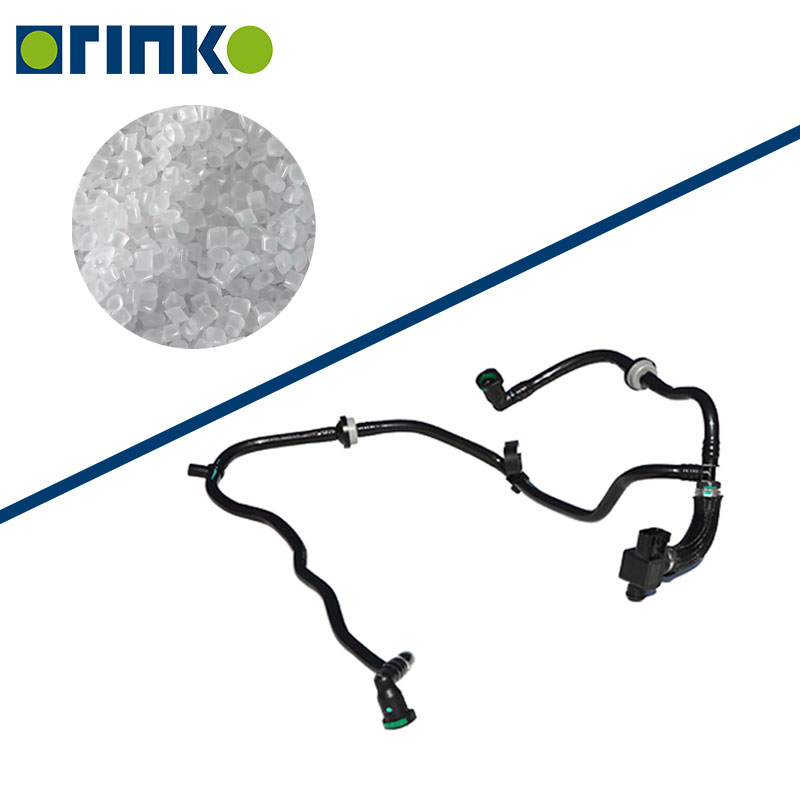
Manufacturers today face unprecedented pressure to reduce Scope 3 carbon emissions. They must meet aggressive regulatory targets and satisfy eco-conscious stakeholders. However, they simply cannot compromise the mechanical, thermal, or chemical performance of their components. This creates a severe procurement dilemma. Many alternative bioplastics fail when subjected to the rigorous demands of industrial, automotive, or electronics applications. They often warp, melt, or degrade prematurely under real-world stresses. Engineers urgently need robust materials they can trust in extreme environments.
This guide focuses on a proven solution to this structural challenge. We evaluate long-chain, high-performance bio-polyamides—specifically PA1010—as a highly viable bridge between sustainability mandates and strict engineering specifications. You will discover how these advanced polymers measure up against legacy fossil-based plastics. We will carefully examine critical performance metrics, supply chain realities, and essential processing guidelines. By the end, you will understand exactly how to seamlessly integrate these sustainable materials into your existing production lines.
Key Takeaways
PA1010 offers comparable or superior dimensional stability and chemical resistance to traditional PA6 and PA66 due to its lower moisture absorption.
Transitioning to a castor oil based nylon resin requires evaluating specific tooling and processing temperatures, though it often acts as a near drop-in replacement.
Validating a sustainable polyamide resin requires strict scrutiny of Life Cycle Assessments (LCAs) and feedstock traceability to avoid greenwashing.
1. The Business Case for Bio-Based Nylon Resin
Adopting sustainable engineering materials requires absolute clarity regarding material definitions. You must distinguish between bio-sourced plastics and biodegradable plastics. Long-chain nylons fall firmly into the bio-sourced category. Engineers design them for extreme durability, not rapid environmental degradation. A high-performance Bio-Based Nylon Resin offers decades of reliable service life. It behaves exactly like its fossil-based counterparts while originating from renewable agricultural feedstocks. We rely on these materials to build long-lasting automotive brackets, heavy-duty industrial gears, and rigid electronic enclosures.
Regulatory frameworks and strict ESG drivers continue to accelerate this material transition. Governments worldwide are implementing stringent plastic taxes and aggressive carbon reporting mandates. Adopting bio-polyamides directly and positively impacts corporate sustainability reports. You can drastically reduce Scope 3 emissions simply by swapping fossil feedstocks for renewable plant-based alternatives. This proactive shift ensures compliance with emerging global plastics regulations before they become mandatory penalties.
Beyond basic compliance, these advanced polymers offer a distinct market positioning advantage. Consumers and B2B clients actively seek verifiable sustainable materials inside their end-user products. Integrating a premium bio-polyamide into consumer electronics or automotive interiors creates a compelling marketing narrative. It demonstrates concrete corporate responsibility. Brands utilizing these advanced resins often secure premium pricing tiers. They effectively capture environmentally conscious market segments while maintaining flawless product reliability.
2. PA1010 vs. Traditional PA6/PA66: Engineering Evaluation Framework
When engineers evaluate new materials, performance metrics dictate the final decision. Traditional PA6 and PA66 dominate the industry but suffer from a well-known flaw. They act like sponges in humid environments. The longer carbon chain in PA1010 nylon resin drastically reduces this hygroscopic tendency. Because it absorbs significantly less moisture, parts maintain exceptional dimensional stability. You can confidently design precision components knowing they will not swell or warp when exposed to severe humidity.
Thermal and mechanical properties remain equally vital. Unreinforced PA1010 offers excellent impact resistance and tensile strength for most standard applications. When compounded into glass-fiber reinforced variants, the material achieves remarkable stiffness and elevated heat deflection temperatures (HDT). It easily withstands the mechanical loads typical of structural automotive components. We consistently see these glass-filled grades replacing die-cast metals in lightweighting initiatives.
Chemical resistance forms another critical pillar of this engineering evaluation. Long-chain polyamides naturally repel aggressive substances. They excel against automotive fluids, including brake fluid, engine oils, and coolants. Furthermore, they resist harsh industrial solvents and caustic cleaning agents. This broad chemical immunity ensures long-term integrity in harsh manufacturing environments or exposed under-hood automotive applications.
We must transparently acknowledge the necessary trade-offs. Traditional fossil-based PA66 still holds a performance edge in continuous, extreme high-heat environments. PA1010 possesses a slightly lower melting point. You should avoid placing it directly against engine exhaust manifolds or inside high-temperature curing ovens. However, smart design choices easily mitigate these limitations. Engineers can incorporate thermal shielding or adjust component placement to leverage the bio-resin's strengths while avoiding its thermal ceiling.
Performance Metric
PA6 / PA66 (Fossil-Based)
PA1010 (Bio-Based)
Design Implication
Moisture Absorption
High (Up to 8.5% at saturation)
Very Low (Approx. 1.5% to 2%)
PA1010 provides vastly superior dimensional accuracy in wet conditions.
Chemical Resistance
Moderate to Good
Excellent
PA1010 resists road salts and aggressive solvents better.
Melting Temperature
High (~220°C to 260°C)
Moderate (~200°C)
PA66 remains necessary for extreme, continuous high-heat zones.
Impact Strength
Good (varies by moisture)
Excellent (highly stable)
PA1010 maintains toughness without relying on ambient humidity.
3. Feedstock Reliability: The Castor Oil Based Nylon Resin Advantage
Supply chain resilience dictates the commercial viability of any new polymer. The agricultural realities behind long-chain bio-polyamides provide immense confidence. The supply chain relies heavily on the robust castor bean plant. Farmers primarily cultivate this hardy crop in arid regions, such as the Gujarat state in India. These regions offer the perfect climate for consistent, high-yield harvests. The established agricultural infrastructure ensures a steady flow of raw materials to global polymer manufacturers.
Ethical sourcing represents a major advantage here. Utilizing a castor oil based nylon resin safely avoids the controversial "food versus fuel" dilemma. Castor plants thrive on marginal, depleted lands. They require minimal irrigation and do not displace essential food crops like corn, wheat, or sugarcane. We can aggressively scale bio-polyamide production without threatening global food security or driving up agricultural land prices.
The chemical extraction process converts these beans into high-performance plastics efficiently. Refineries extract castor oil from the harvested seeds. They then subject this oil to severe alkaline cleavage to produce sebacic acid. This specific ten-carbon diacid forms the critical chemical backbone of PA1010. By polymerizing bio-based sebacic acid with decamethylenediamine, manufacturers secure a highly stable, 100% renewable monomer supply. This controlled chemical pathway guarantees identical polymer chains batch after batch.
4. Implementation Realities: Extrusion, Molding, and Transition Risks
Transitioning to new materials naturally introduces manufacturing risks. You must evaluate tooling compatibility before authorizing a full production switch. Existing molds designed for PA12 usually accommodate PA1010 seamlessly. Their shrinkage rates match closely. However, molds cut specifically for PA66 may require slight modifications. A bio-based engineering plastic typically shrinks slightly less than highly crystalline PA66. Engineers should run mold-flow simulations to verify dimensional tolerances before initiating physical trials.
Processing parameters demand careful adaptation to prevent costly material degradation. Melt temperatures require strict calibration during injection molding or extrusion. Because bio-polyamides have slightly lower melting points, excessive heat quickly degrades the polymer chain. This causes yellowing and severe loss of mechanical strength. Proper drying remains non-negotiable. You must achieve optimal moisture levels prior to processing to prevent hydrolysis and visible surface defects like splay.
Quality assurance protocols require immediate updating during this transition. Establish a new testing baseline to monitor batch-to-batch consistency. Bio-based resins can occasionally exhibit slightly wider tolerance bands regarding melt flow indices compared to deeply legacy fossil materials.
Best Practices for Processing Bio-Polyamides
Dry thoroughly: Utilize desiccant dryers to reach a moisture content below 0.1% before molding.
Control shear: Optimize screw speeds to prevent excessive shear heating, which degrades the bio-polymer chains.
Adjust mold temperatures: Maintain mold temperatures between 60°C and 80°C to achieve optimal surface finish and crystallinity.
Common Processing Mistakes
Over-drying the resin: Leaving the material in the hopper dryer too long causes thermal oxidation and discoloration.
Using legacy PA66 profiles: Applying standard high-heat PA66 barrel temperatures will instantly burn PA1010 resins.
Ignoring cold slugs: Failing to use properly sized cold slug wells leads to surface blemishes on finished components.
5. Shortlisting Suppliers and Validating Claims
The bioplastics market unfortunately contains instances of exaggerated greenwashing. You must aggressively vet potential vendors to ensure authentic sustainability. Essential certifications provide the first line of defense. Mandate that suppliers hold ISCC PLUS (International Sustainability and Carbon Certification) or strictly equivalent traceability frameworks. These recognized certifications verify that the raw biomass originates from sustainable, audited agricultural sources rather than deforested lands.
Demand absolute transparency regarding Life Cycle Assessment (LCA) data. Request comprehensive cradle-to-gate LCA documentation from every vendor. You must understand the exact carbon footprint generated during monomer extraction and polymerization. Furthermore, reject any supplier who cannot scientifically quantify their renewable carbon content. Legitimate manufacturers of a sustainable polyamide resin use standard methods like ASTM D6866. This radiocarbon testing definitively proves the percentage of modern plant-based carbon versus ancient fossil carbon.
A structured Proof of Concept (PoC) prevents catastrophic line failures. Never jump directly from a datasheet to full-scale mass production.
Material Data Sheet (MDS) Review: Compare the bio-resin's tensile strength, HDT, and shrinkage rates directly against your current legacy material.
Digital Simulation: Run mold-flow analysis software to predict warpage, weld lines, and optimal gate locations.
Physical Prototyping: Machine a test mold or utilize 3D-printed tooling to produce initial physical samples.
Harsh Environment Testing: Subject prototypes to accelerated aging, thermal cycling, and chemical exposure baths.
Limited Pilot Run: Execute a low-volume production run on existing manufacturing equipment to dial in actual barrel and mold temperatures.
Conclusion
Bio-based nylon resin is no longer an experimental, niche laboratory concept. It stands today as a commercially mature, fully engineering-grade material. By leveraging long-chain polyamides like PA1010, manufacturers can drastically lower their environmental footprint without sacrificing critical physical properties. The castor-oil supply chain offers ethical, highly stable feedstocks that ignore the food-versus-fuel debate entirely. While processing parameters require careful tuning, the resulting dimensional stability and chemical resistance frequently outperform legacy fossil plastics.
Actionable Next Steps
Identify two or three critical-path components currently molded from PA12 or PA66.
Request detailed PA1010 material samples and corresponding ASTM D6866 certificates from verified suppliers.
Schedule a joint meeting between procurement and engineering to review cradle-to-gate LCA documentation.
Initiate digital mold-flow simulations to verify shrinkage rates before scheduling physical machine trials.
FAQ
Q: Is PA1010 completely biodegradable?
A: No. It is 100% bio-based, meaning we derive it directly from renewable plant feedstocks. However, manufacturers engineer it specifically for extreme durability and long-term use. It functions exactly like a traditional, highly robust thermoplastic and will not degrade prematurely in the field.
Q: Does bio-based engineering plastic cost more than traditional nylon?
A: Yes, there is currently a premium on the initial material price. However, corporations often offset this upfront premium through favorable carbon accounting benefits, achieving internal sustainability metrics, and securing premium end-product pricing from eco-conscious consumers who value verifiable green manufacturing.
Q: Can PA1010 be recycled at the end of its life?
A: Yes. Because PA1010 remains a true thermoplastic, recycling facilities can mechanically grind, melt, and reprocess it. It seamlessly enters standard polyamide recycling streams, powerfully supporting global circular economy goals and reducing overall plastic waste.
Orinko Advanced Plastics Co.,ltd. is an innovator and is dedicated to developing high performance Polymer Materials.Including Nylon/Polyamide, Engineering Plastics etc.